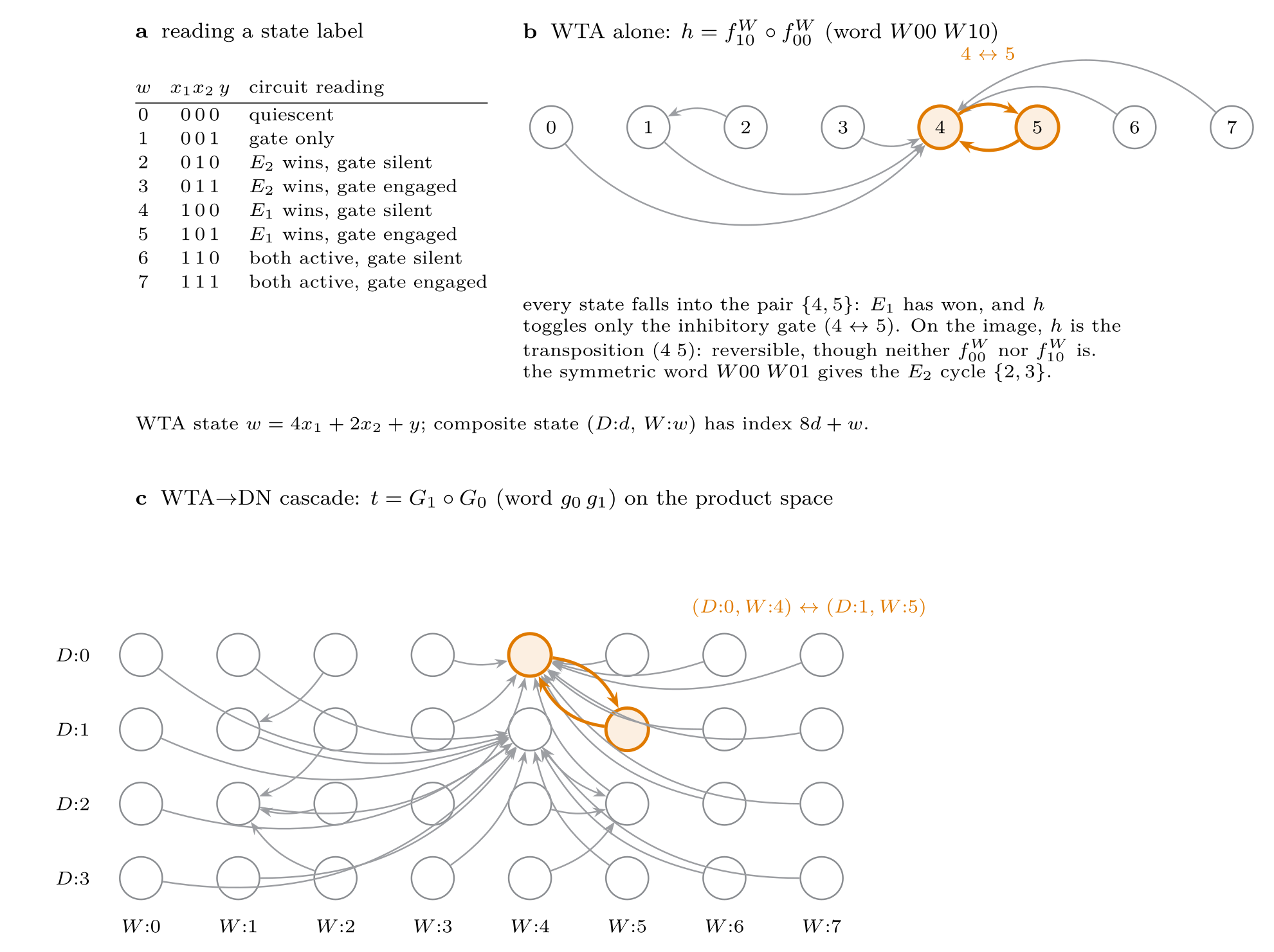
Experimental validation of the influence of white matter anisotropy on the intracranial EEG forward solution
Summary
This paper investigates how the directional electrical conductivity (anisotropy) of white matter affects the precision of mapping electrical fields inside the brain. By simultaneously applying localized electrical stimulation at known brain locations and recording intracranial EEG, the study empirically tests various Finite Element Method (FEM) head models against directly measured data. The findings demonstrate that incorporating Diffusion Tensor Imaging (DTI)-based tissue anisotropy and cerebrospinal fluid into the forward model significantly improves calculation accuracy over traditional isotropic models, particularly when the active electrical source is located near highly anisotropic brain regions.
Links
BibTeX tap to expand
@Article{Bangera_forward_2010,
author={Bangera, Nitin B.
and Schomer, Donald L.
and Dehghani, Nima
and Ulbert, Istvan
and Cash, Sydney
and Papavasiliou, Steve
and Eisenberg, Solomon R.
and Dale, Anders M.
and Halgren, Eric},
title={Experimental validation of the influence of white matter anisotropy on the intracranial EEG forward solution},
journal={Journal of Computational Neuroscience},
year={2010},
month={Dec},
day={01},
volume={29},
number={3},
pages={371-387},
issn={1573-6873},
doi={10.1007/s10827-009-0205-z},
url={https://doi.org/10.1007/s10827-009-0205-z}
}
Code & Data
The room
Abstract
Forward solutions with different levels of complexity are employed for localization of current generators, which are responsible for the electric and magnetic fields measured from the human brain. The influence of brain anisotropy on the forward solution is poorly understood. The goal of this study is to validate an anisotropic model for the intracranial electric forward solution by comparing with the directly measured ‘gold standard’. Dipolar sources are created at known locations in the brain and intracranial electroencephalogram (EEG) is recorded simultaneously. Isotropic models with increasing level of complexity are generated along with anisotropic models based on Diffusion tensor imaging (DTI). A Finite Element Method based forward solution is calculated and validated using the measured data. Major findings are (1) An anisotropic model with a linear scaling between the eigenvalues of the electrical conductivity tensor and water self-diffusion tensor in brain tissue is validated. The greatest improvement was obtained when the stimulation site is close to a region of high anisotropy. The model with a global anisotropic ratio of 10:1 between the eigenvalues (parallel: tangential to the fiber direction) has the worst performance of all the anisotropic models. (2) Inclusion of cerebrospinal fluid as well as brain anisotropy in the forward model is necessary for an accurate description of the electric field inside the skull. The results indicate that an anisotropic model based on the DTI can be constructed non-invasively and shows an improved performance when compared to the isotropic models for the calculation of the intracranial EEG forward solution.
Citing
If you use this code or build on these ideas, please cite the paper using the BibTeX entry above.
Doors · concepts in this room
Related rooms
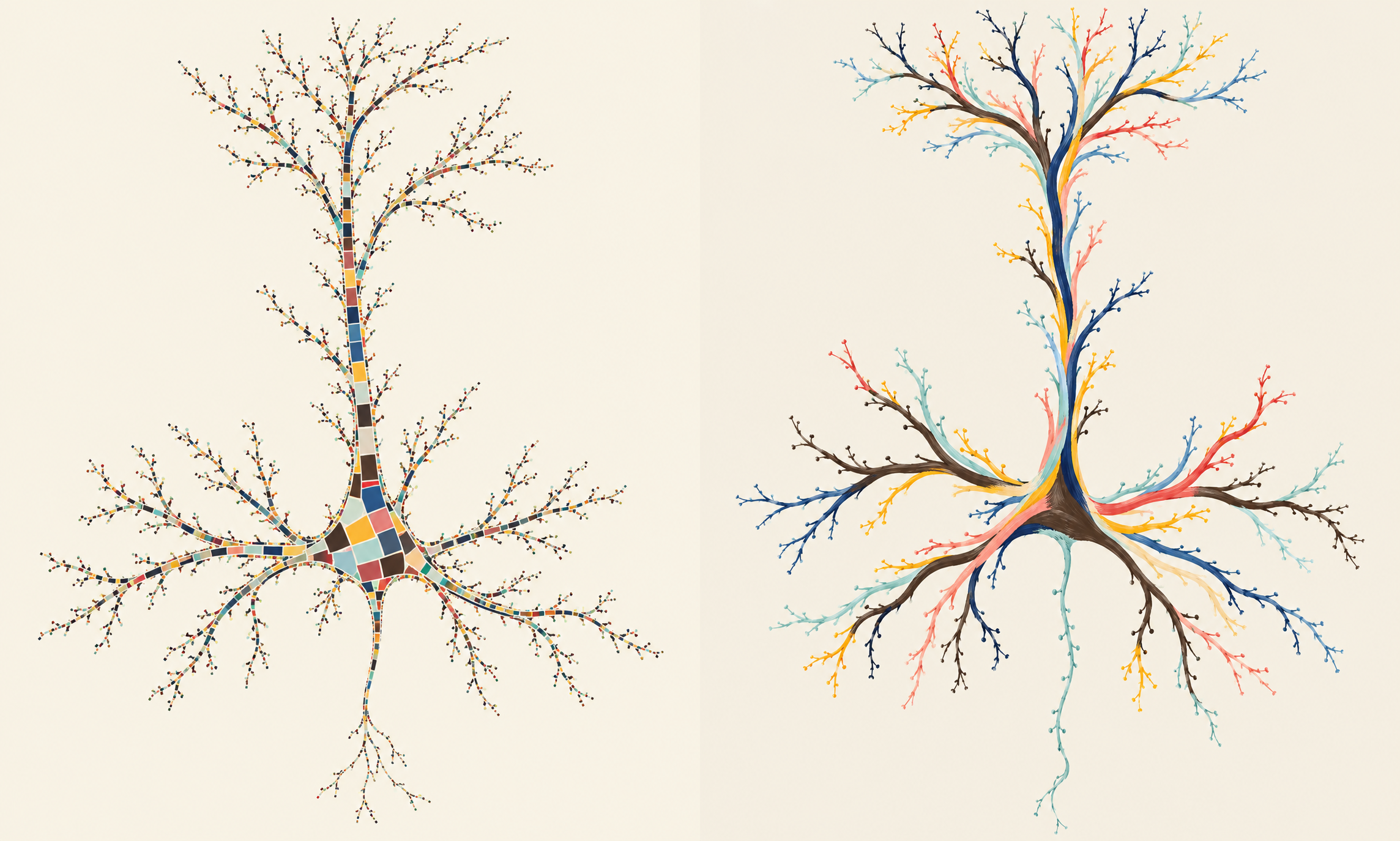
How Long Is the Coast of a Neuron? Resolution-Dependent Interaction Order and Computational Capacity
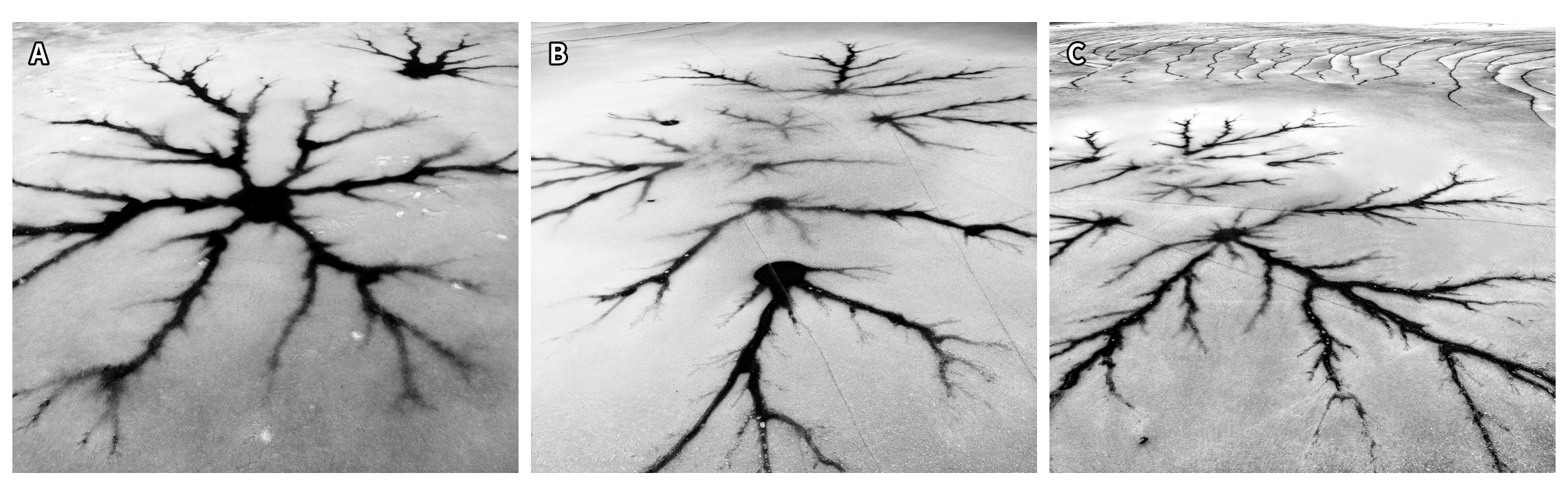
Field closure, ice neurons, and when a dendrite is a motif