Spatiotemporal dynamics of neocortical excitation and inhibition during human sleep
Summary
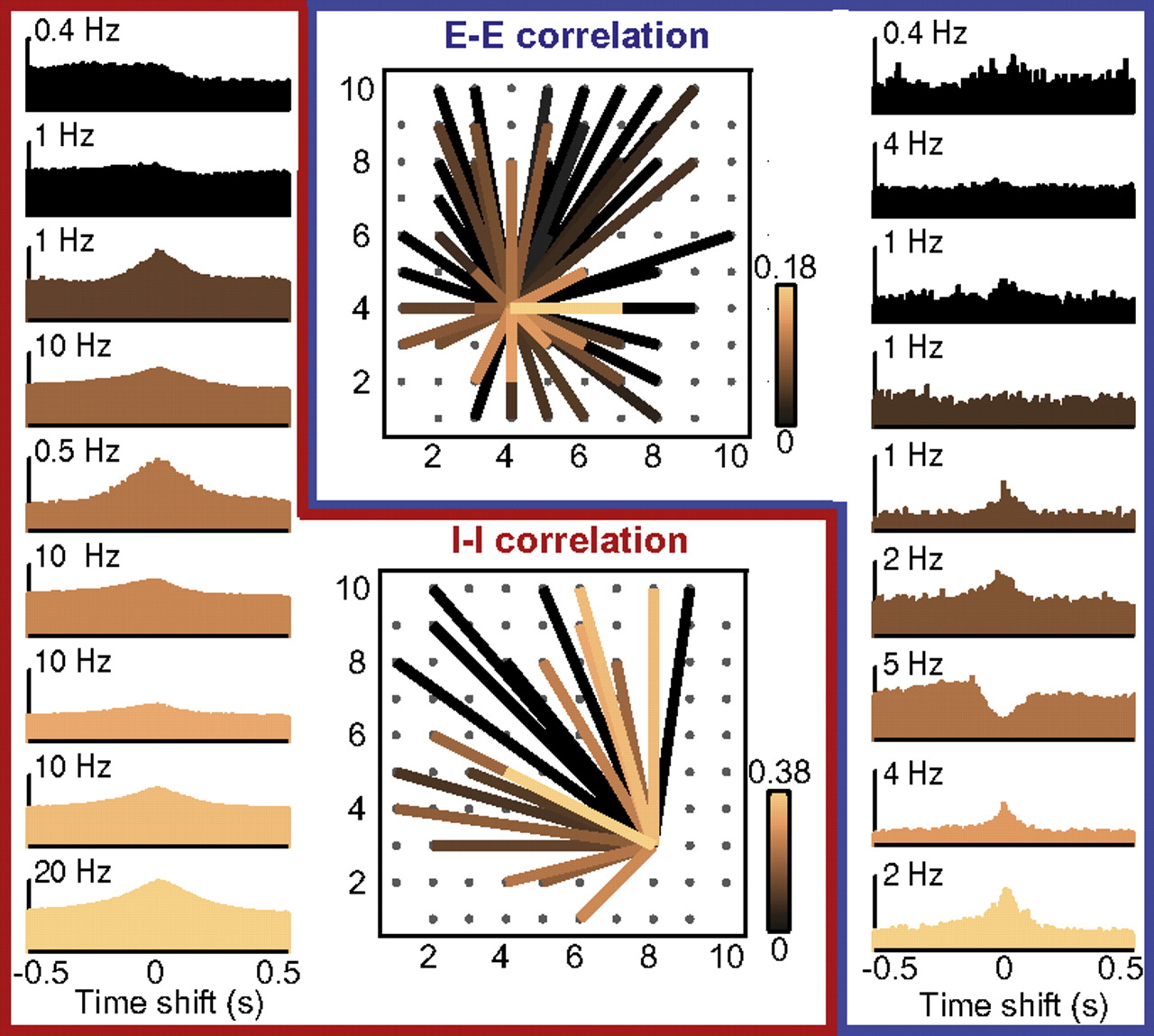
This paper provides a detailed, microcircuit-level characterization of the balance between excitatory and inhibitory neuronal activity in the human brain. Using high-density 2D multielectrode arrays to record population unit activity during sleep, we successfully separated neurons into regular-spiking cells (putative excitatory pyramidal neurons) and fast-spiking cells (putative inhibitory interneurons), validating these identities by identifying functional monosynaptic connections. The study demonstrates that spatial spike correlations decay exponentially with distance for excitatory cells but remain relatively uniform for inhibitory cells, exhibiting a spatial constant that closely matches the known physical dimensions of human cortical columns.
Links
BibTeX tap to expand
@article{PeyracheDehghani_spatiotemporal_2012,
author = {Adrien Peyrache  and Nima Dehghani  and Emad N. Eskandar  and Joseph R. Madsen  and William S. Anderson  and Jacob A. Donoghue  and Leigh R. Hochberg  and Eric Halgren  and Sydney S. Cash  and Alain Destexhe},
title = {Spatiotemporal dynamics of neocortical excitation and inhibition during human sleep},
journal = {Proceedings of the National Academy of Sciences},
volume = {109},
number = {5},
pages = {1731-1736},
year = {2012},
doi = {10.1073/pnas.1109895109},
URL = {https://www.pnas.org/doi/abs/10.1073/pnas.1109895109},
eprint = {https://www.pnas.org/doi/pdf/10.1073/pnas.1109895109},
}
Code & Data
The room
Abstract
Intracranial recording is an important diagnostic method routinely used in a number of neurological monitoring scenarios. In recent years, advancements in such recordings have been extended to include unit activity of an ensemble of neurons. However, a detailed functional characterization of excitatory and inhibitory cells has not been attempted in human neocortex, particularly during the sleep state. Here, we report that such feature discrimination is possible from high-density recordings in the neocortex by using 2D multielectrode arrays. Successful separation of regular-spiking neurons (or bursting cells) from fast-spiking cells resulted in well-defined clusters that each showed unique intrinsic firing properties. The high density of the array, which allowed recording from a large number of cells (up to 90), helped us to identify apparent monosynaptic connections, confirming the excitatory and inhibitory nature of regular-spiking and fast-spiking cells, thus categorized as putative pyramidal cells and interneurons, respectively. Finally, we investigated the dynamics of correlations within each class. A marked exponential decay with distance was observed in the case of excitatory but not for inhibitory cells. Although the amplitude of that decline depended on the timescale at which the correlations were computed, the spatial constant did not. Furthermore, this spatial constant is compatible with the typical size of human columnar organization. These findings provide a detailed characterization of neuronal activity, functional connectivity at the microcircuit level, and the interplay of excitation and inhibition in the human neocortex.
Citing
If you use this code or build on these ideas, please cite the paper using the BibTeX entry above.
Doors · concepts in this room
Related rooms
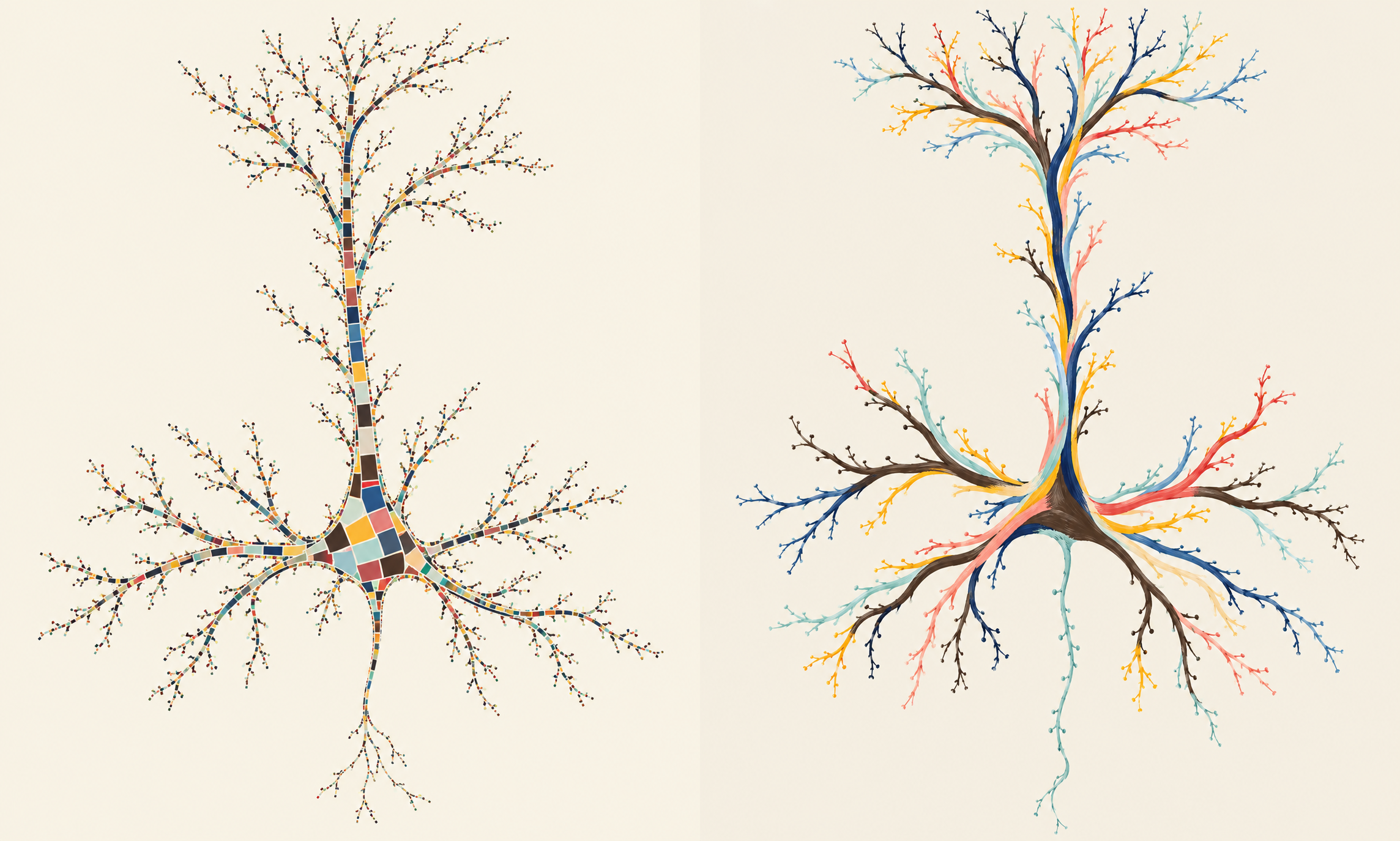
How Long Is the Coast of a Neuron? Resolution-Dependent Interaction Order and Computational Capacity
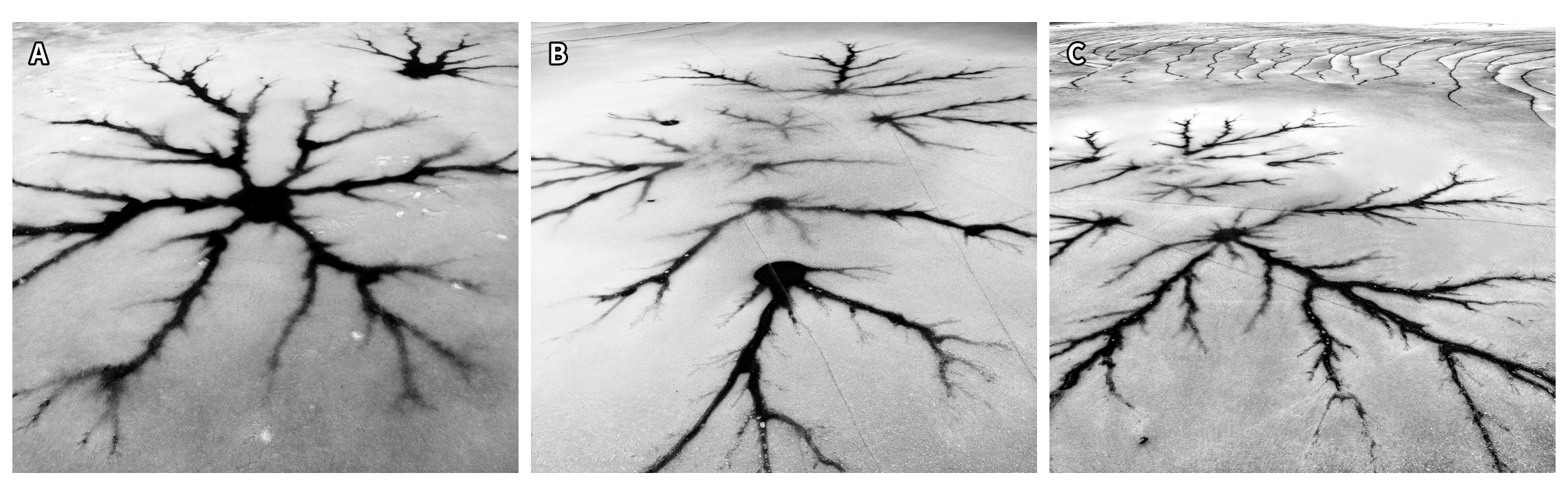
Field closure, ice neurons, and when a dendrite is a motif