Bio-inspired AI: Integrating Biological Complexity into Artificial Intelligence
Summary
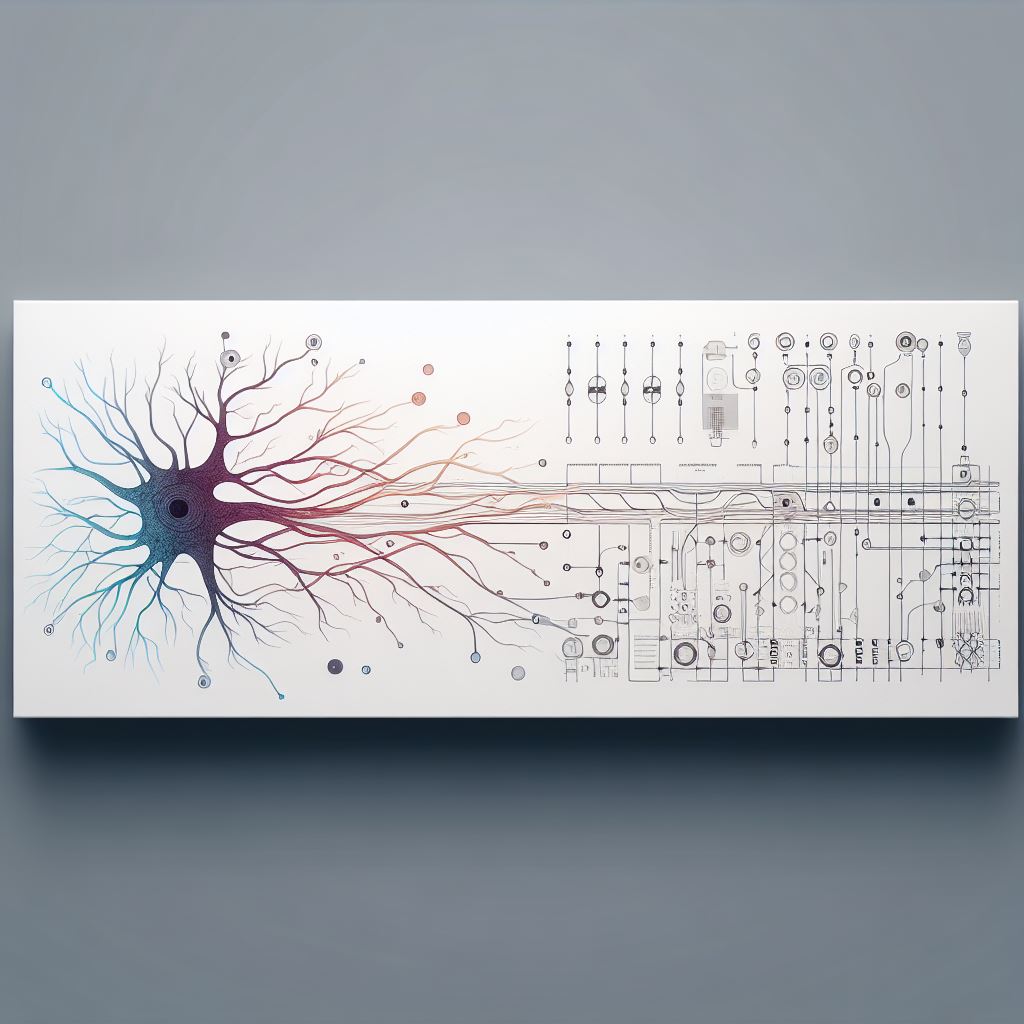
This paper explores how foundational principles from biological computation can be leveraged to design more robust, adaptable, and truly intelligent artificial systems. Moving beyond a purely neural-centric view of intelligence, the authors argue that adaptive problem-solving and information processing occur across multiple structural scales—from molecules and single cells navigating physiological "morphospaces" to entire organisms—a concept known as polycomputing. By examining essential biological mechanisms such as context-dependent hierarchical organization, trial-and-error heuristics, and top-down causality, the framework outlines a path to overcome the rigidity and massive energy demands of current connectionist AI architectures.
Links
BibTeX tap to expand
@misc{dehghani_bioai-2025,
    title={Bio-inspired AI: Integrating Biological Complexity into Artificial Intelligence},
    author={Nima Dehghani and Michael Levin},
    year={2024},
    eprint={2411.15243},
    archivePrefix={arXiv},
    primaryClass={q-bio.NC},
    url={https://arxiv.org/abs/2411.15243},
}
Code & Data
The room
Abstract
The pursuit of creating artificial intelligence (AI) mirrors our longstanding fascination with understanding our own intelligence. From the myths of Talos to Aristotelian logic and Heron’s inventions, we have sought to replicate the marvels of the mind. While recent advances in AI hold promise, singular approaches often fall short in capturing the essence of intelligence. This paper explores how fundamental principles from biological computation–particularly context-dependent, hierarchical information processing, trial-and-error heuristics, and multi-scale organization–can guide the design of truly intelligent systems. By examining the nuanced mechanisms of biological intelligence, such as top-down causality and adaptive interaction with the environment, we aim to illuminate potential limitations in artificial constructs. Our goal is to provide a framework inspired by biological systems for designing more adaptable and robust artificial intelligent systems.
Citing
If you use this code or build on these ideas, please cite the paper using the BibTeX entry above.
Doors · concepts in this room
Related rooms
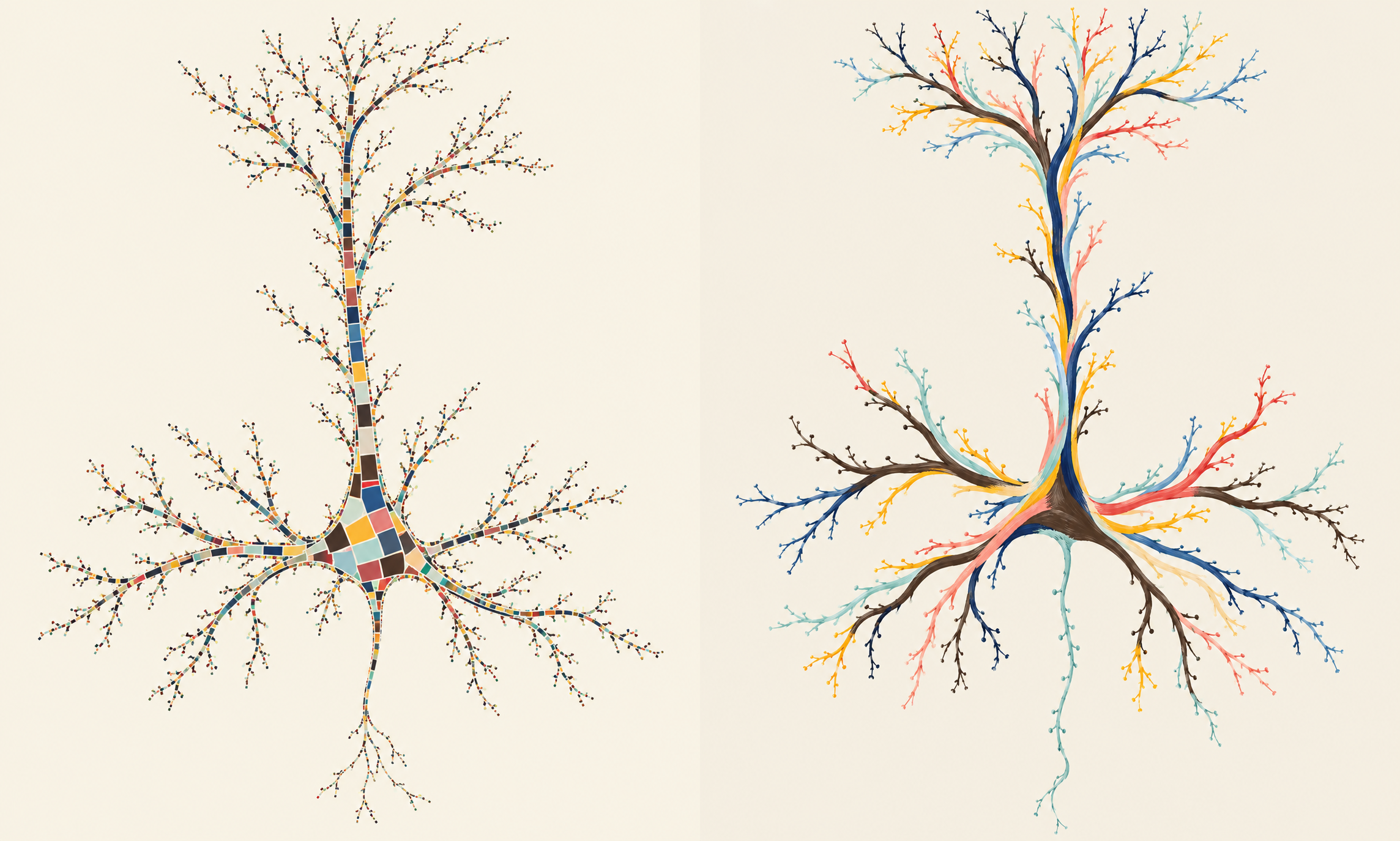
How Long Is the Coast of a Neuron? Resolution-Dependent Interaction Order and Computational Capacity
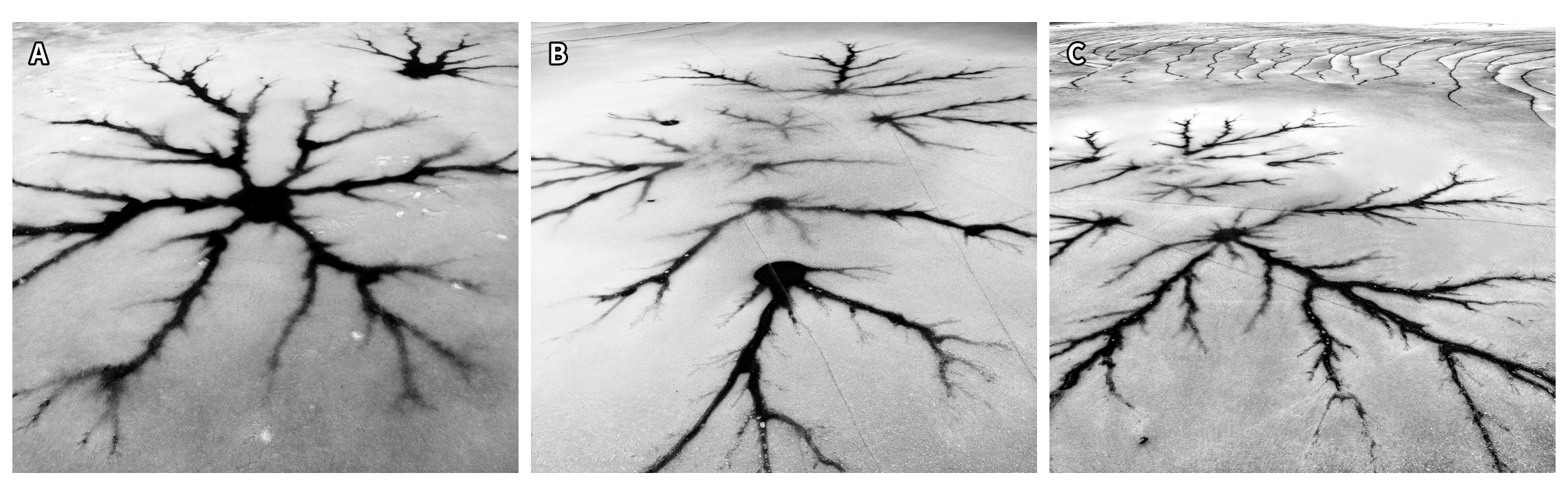
Field closure, ice neurons, and when a dendrite is a motif