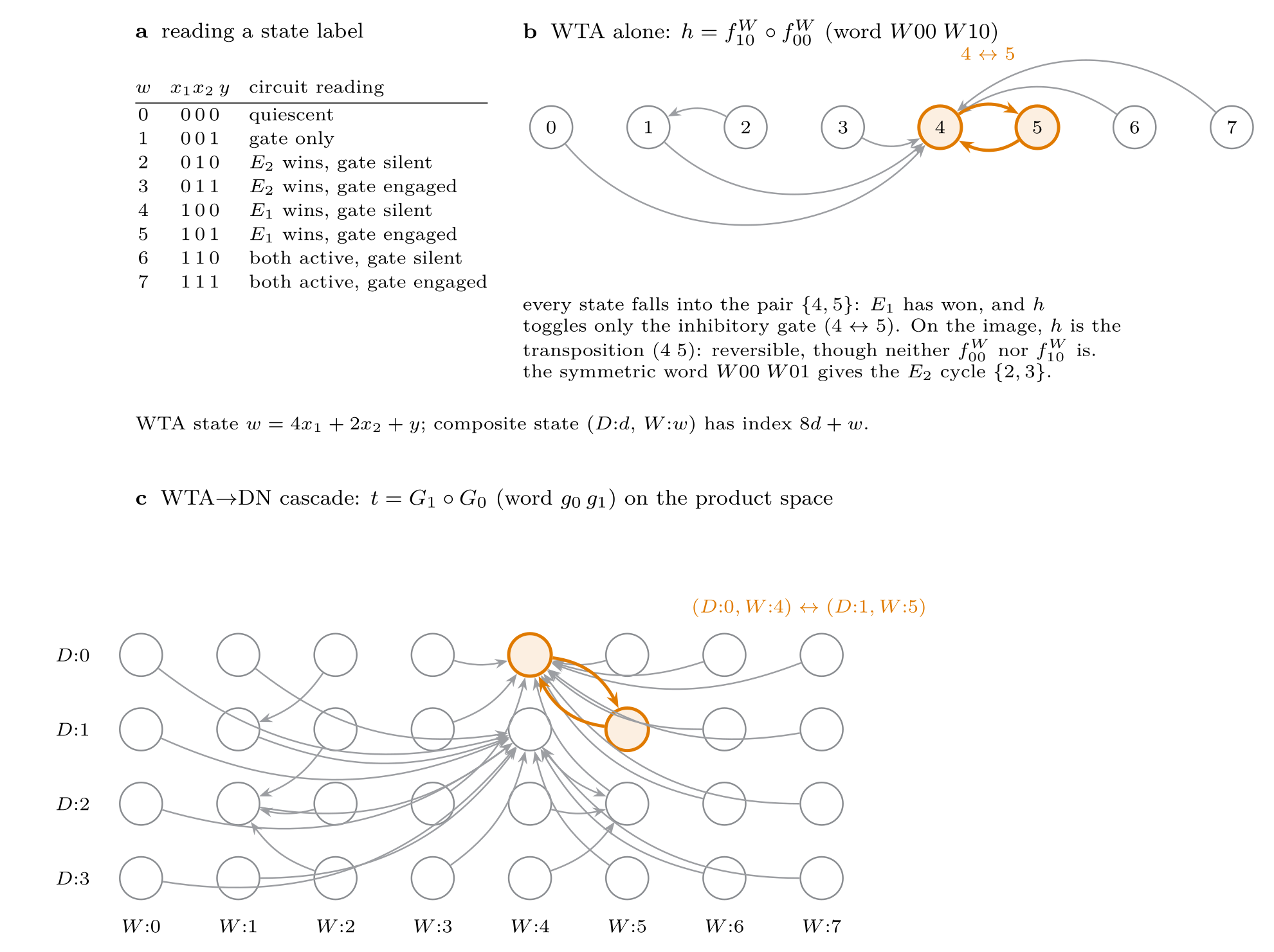
Symmetry’s Edge in Cortical Dynamics Multiscale Dynamics of Ensemble Excitation and Inhibition
Summary
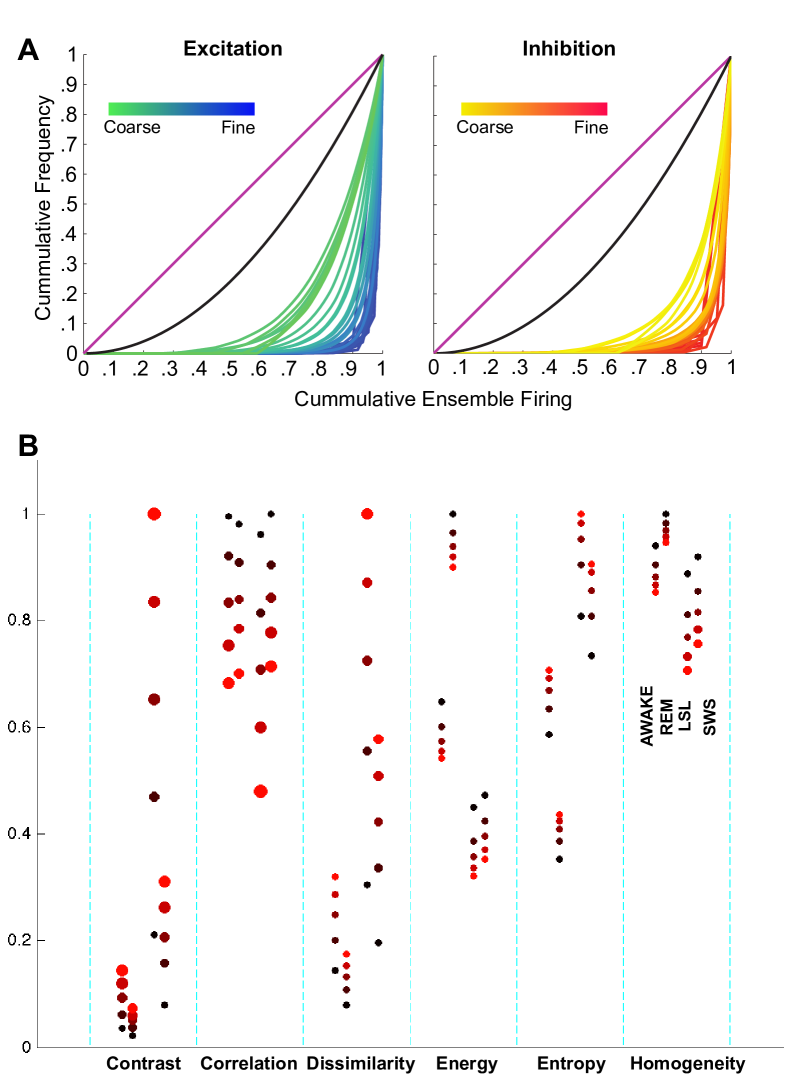
This paper proposes a statistical physics-inspired framework for analyzing collective behavior and emergent laws in large neural populations. Utilizing multielectrode and multiscale neural recordings, the study characterizes population-level ensemble Excitation/Inhibition (E/I) balance across different functional vigilance states, such as the wake-sleep cycle. By evaluating invariances, order parameters, and broken symmetries, the research introduces a quantitative approach to distinguishing normal macroscale cognitive states from pathological network-level breakdowns, such as those that trigger epileptic seizures.
Links
BibTeX tap to expand
@misc{Dehghani-symmetrysedgecorticaldynamics-2025,
    title={Symmetry's Edge in Cortical Dynamics: Multiscale Dynamics of Ensemble Excitation and Inhibition},
    author={Nima Dehghani},
    year={2025},
    eprint={2306.11965},
    archivePrefix={arXiv},
    primaryClass={q-bio.NC},
    url={https://arxiv.org/abs/2306.11965},
}
Code & Data
The room
Abstract
Creating a quantitative theory for the cortex presents challenges and raises questions. What are the significant scales–micro, meso, or macroscopic? What are the interactions–pairwise, higher order, or mean-field? And what control parameters are relevant–noisy, dissipative, or emergent?
We suggest an approach inspired by advances in understanding matter. This involves identifying invariances in neuron ensemble dynamics, searching for order parameters connecting key degrees of freedom and distinguishing macroscopic states, and pinpointing broken symmetries to uncover emergent laws when neurons interact and coordinate.
Using multielectrode and multiscale neural recordings, we measure population-level ensemble Excitation/Inhibition (E/I) balance, differing from the input-level E/I balance of single neurons, to study collective behavior in large neural populations. We investigate a set of parameters that can assist us in differentiating between various functional system states (during wake/sleep cycle) and pinpointing broken symmetries that serve different information processing and memory functions. Furthermore, we identify pathological broken symmetries that result in states like seizures.
Citing
If you use this code or build on these ideas, please cite the paper using the BibTeX entry above.
Doors · concepts in this room
Related rooms
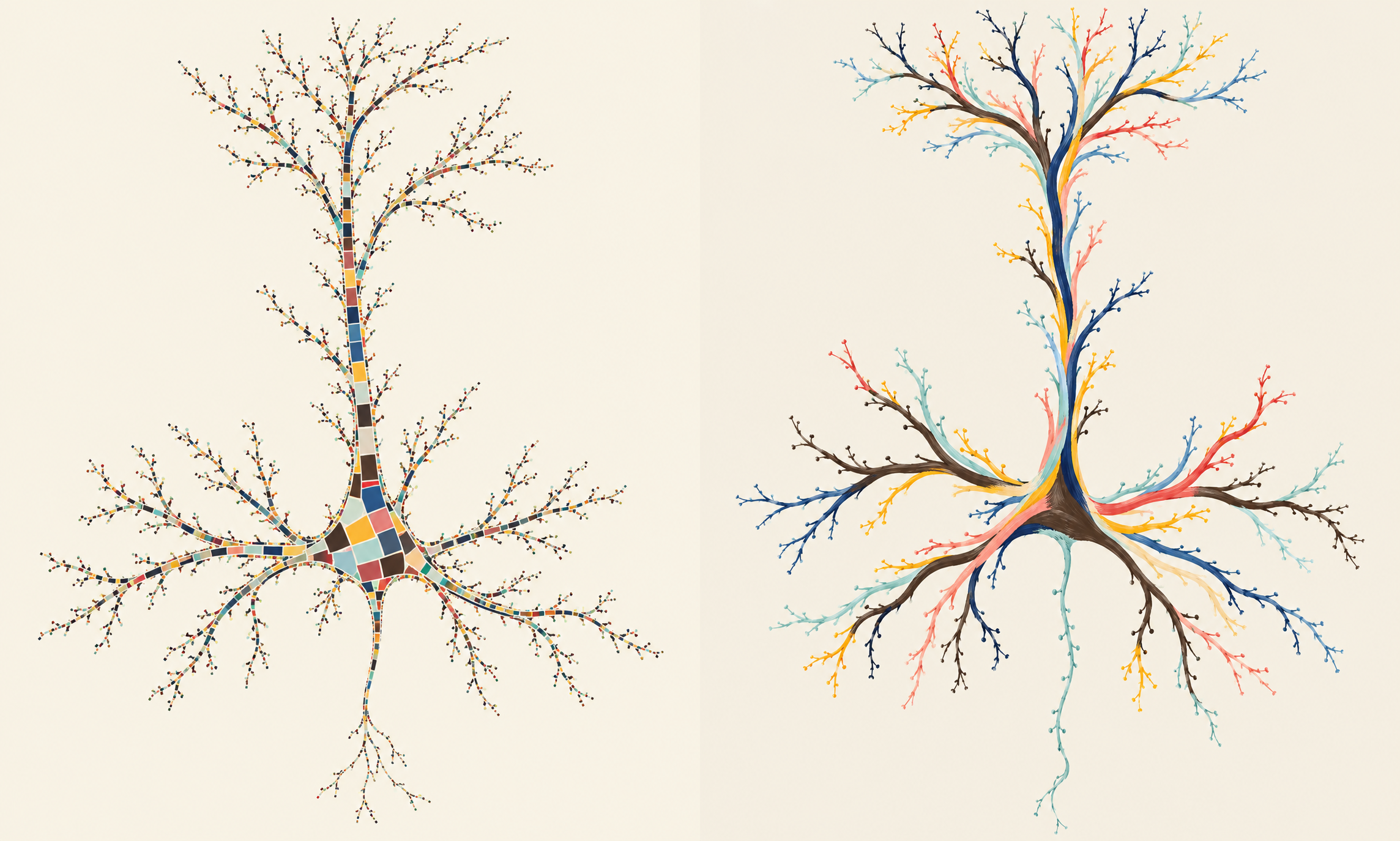
How Long Is the Coast of a Neuron? Resolution-Dependent Interaction Order and Computational Capacity
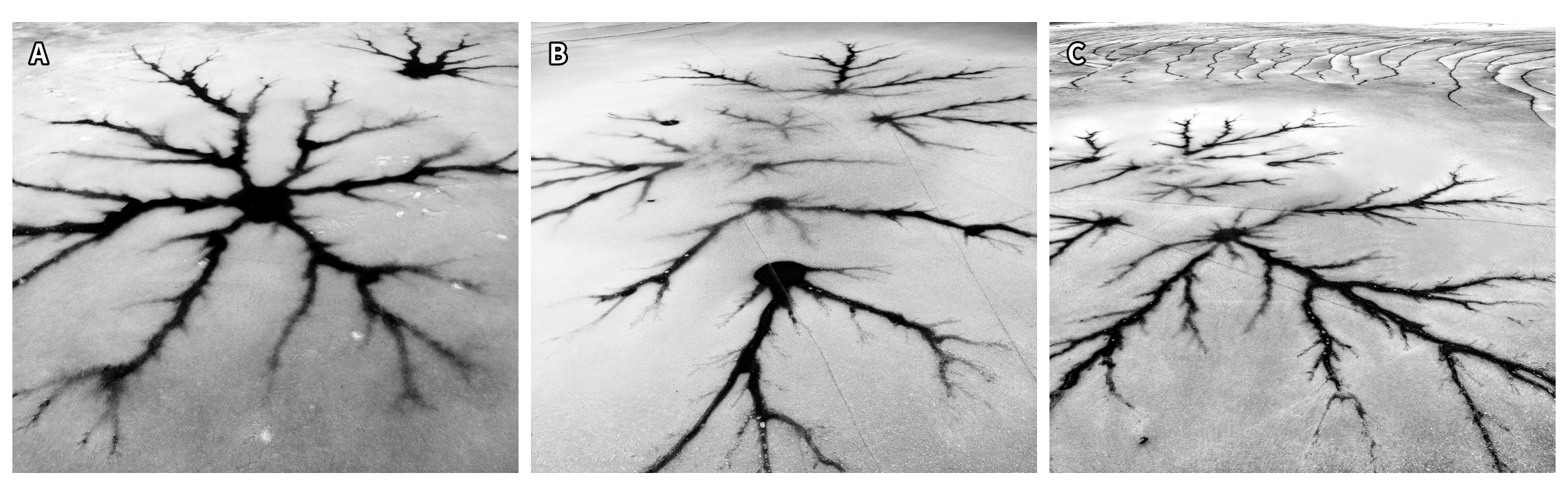
Field closure, ice neurons, and when a dendrite is a motif