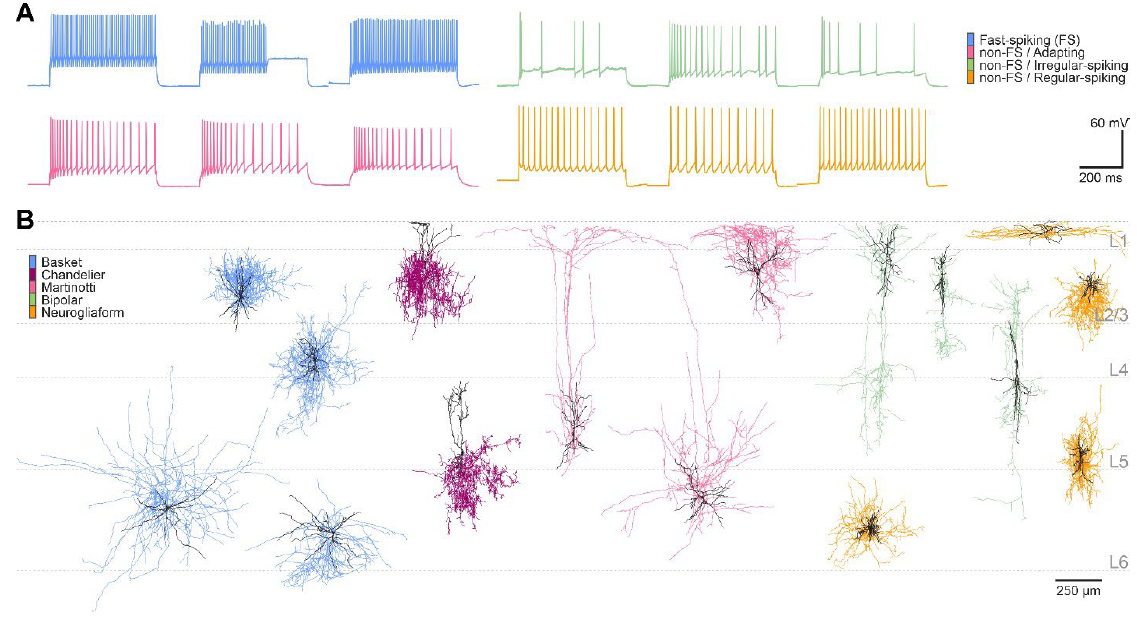
Morphoelectric properties of inhibitory neurons shift gradually and regardless of cell type along the depth of the cerebral cortex
Summary
This work shows that cortical interneuron morphoelectric properties are organized by two separable axes: molecularly related, depth-independent cell-type structure and gradual, depth-dependent shifts shared across types. The blog explains why this matters for interneuron classification, laminar circuit modeling, and future bio-inspired AI architectures that combine discrete functional motifs with continuous depth-dependent modulation.
Links
BibTeX tap to expand
@article{Yanez_2026_inhibition,
  author = {Y{\'a}{\~n}ez, Felipe and Messore, Fernando and Qi, Guanxiao and Dehghani, Nima and Meyer, Hanno S. and Feldmeyer, Dirk and Sakmann, Bert and Oberlaender, Marcel},
  title = {Morphoelectric properties of inhibitory neurons shift gradually and regardless of cell type along the depth of the cerebral cortex},
  elocation-id = {2026.03.05.709819},
  year = {2026},
  doi = {10.64898/2026.03.05.709819},
  publisher = {Cold Spring Harbor Laboratory},
  URL = {https://www.biorxiv.org/content/early/2026/03/05/2026.03.05.709819},
  eprint = {https://www.biorxiv.org/content/early/2026/03/05/2026.03.05.709819.full.pdf},
  journal = {bioRxiv},
}
Code & Data
The room
Abstract
How can we understand the enormous diversity of the GABAergic inhibitory neurons in the cerebral cortex? To address this question, we quantify the electrophysiological and morphological properties of inhibitory neurons across the depth of an entire cortical column in the rat barrel cortex. We find properties that shift gradually with the cortical depth of the cell bodies across all inhibitory neurons, regardless of their cell types. By isolating morphoelectric variations from their shifts along the cortical depth, we find that the same simple relationships between morphoelectric properties distinguish between the four main molecular cell types of inhibitory neurons at any cortical depth, and in both the rat barrel cortex and mouse primary visual cortex. We provide converging evidence from dense electron-microscopic reconstructions of inhibitory neurons in the mouse visual cortex, and observe comparable depth-dependent shifts in additional datasets from the mouse primary motor cortex and the middle temporal gyrus of the human cortex. Our findings indicate that two different sources of morphoelectric variations can account for the diversity of cortical inhibitory neurons. The first source is molecular cell type-specific, but cortical depth-independent. The second source is cortical depth-dependent, but affects inhibitory neurons similarly across all cell types. We propose that intrinsic developmental specification vs. extrinsic environmental modulation leads to such a decoupling of inhibitory type-specific properties from gradual shifts of these properties with cortical depth.
Citing
If you use this code or build on these ideas, please cite the paper using the BibTeX entry above.
Doors · concepts in this room
Related rooms
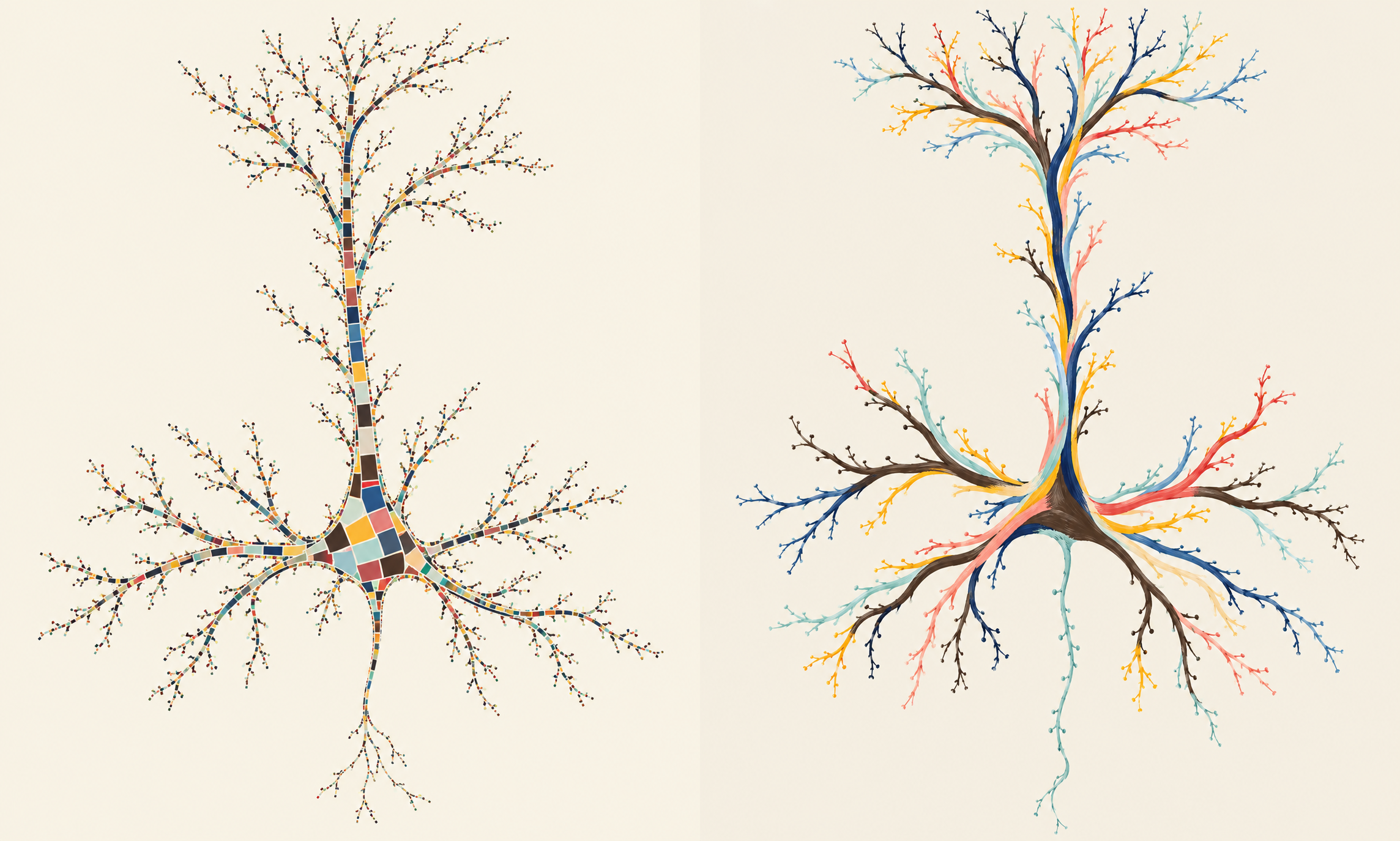
How Long Is the Coast of a Neuron? Resolution-Dependent Interaction Order and Computational Capacity
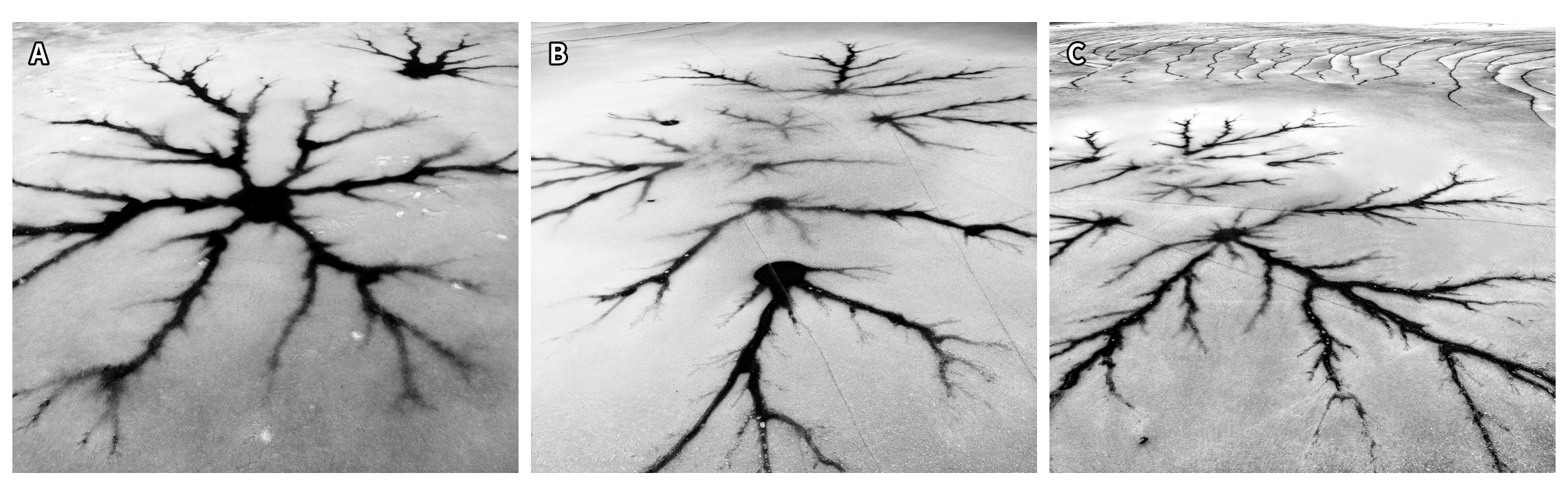
Field closure, ice neurons, and when a dendrite is a motif