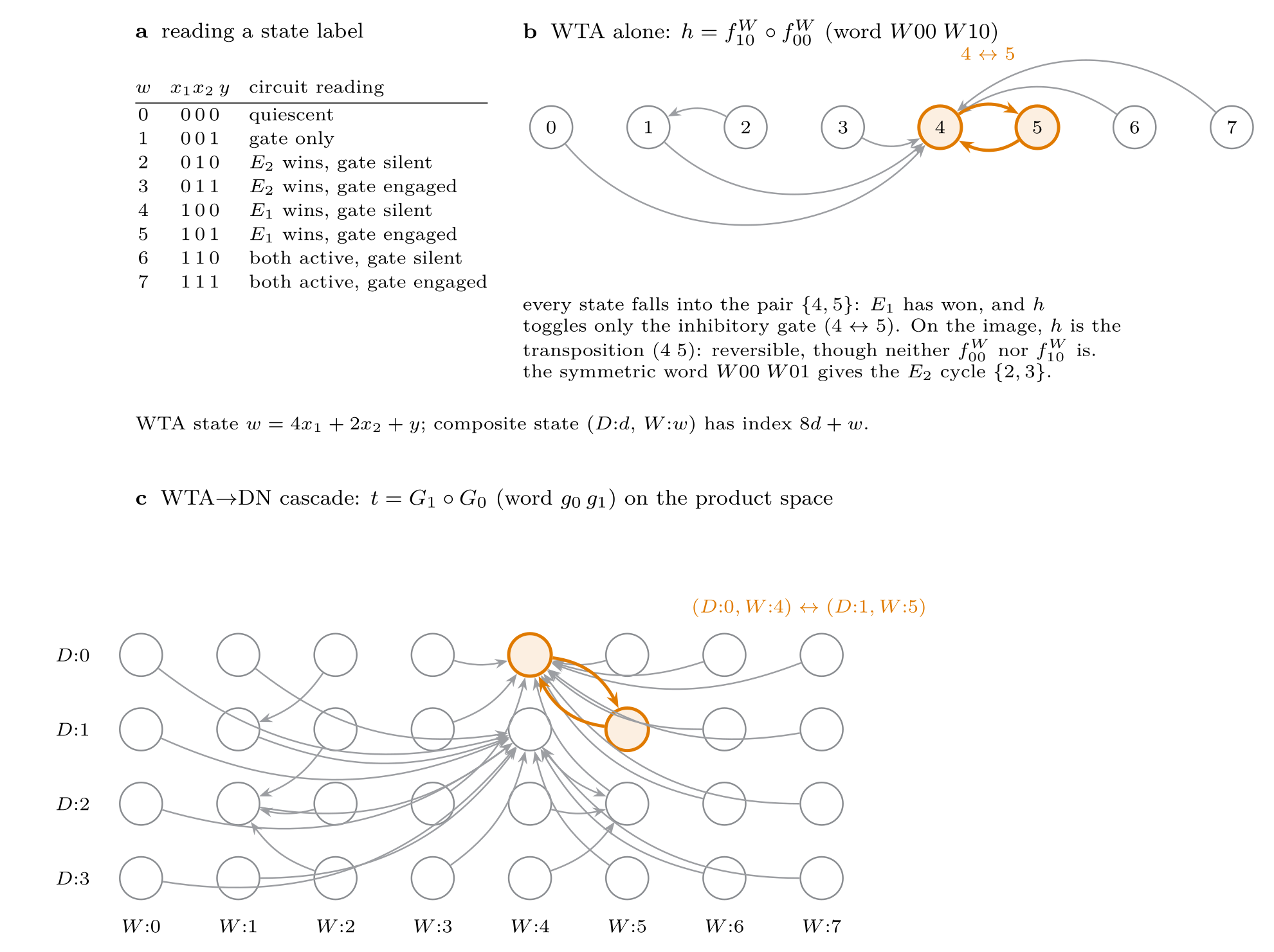
The Human K-Complex as an Isolated Cortical "Down-State"
Summary
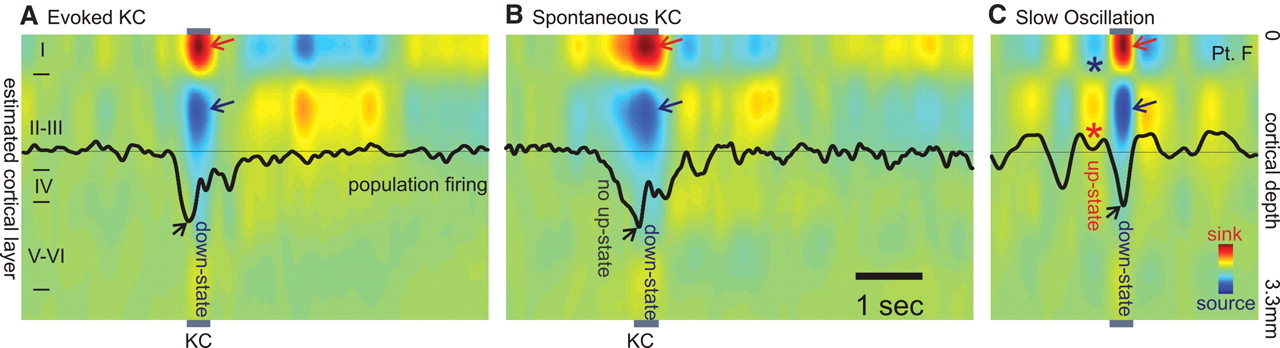
This paper demonstrates that the K-complex represents an isolated "down-state" characterized by a significant decrease in neuronal firing and network activity. By utilizing simultaneous intracortical and subdural recordings, we show these events are generated by widespread dendritic currents, linking human sleep architecture to fundamental cortical processing modes previously observed in animal models.
Links
BibTeX tap to expand
@article{CashHalgrenDehghani_KC_2009,
author = {Sydney S. Cash  and Eric Halgren  and Nima Dehghani  and Andrea O. Rossetti  and Thomas Thesen  and ChunMao Wang  and Orrin Devinsky  and Ruben Kuzniecky  and Werner Doyle  and Joseph R. Madsen  and Edward Bromfield  and Loránd Erőss  and Péter Halász  and George Karmos  and Richárd Csercsa  and Lucia Wittner  and István Ulbert},
title = {The Human K-Complex Represents an Isolated Cortical Down-State},
journal = {Science},
volume = {324},
number = {5930},
pages = {1084-1087},
year = {2009},
doi = {10.1126/science.1169626},
URL = {https://www.science.org/doi/abs/10.1126/science.1169626},
eprint = {https://www.science.org/doi/pdf/10.1126/science.1169626},
}
Code & Data
The room
Abstract
The electroencephalogram (EEG) is a mainstay of clinical neurology and is tightly correlated with brain function, but the specific currents generating human EEG elements remain poorly specified because of a lack of microphysiological recordings. The largest event in healthy human EEGs is the K-complex (KC), which occurs in slow-wave sleep. Here, we show that KCs are generated in widespread cortical areas by outward dendritic currents in the middle and upper cortical layers, accompanied by decreased broadband EEG power and decreased neuronal firing, which demonstrate a steep decline in network activity. Thus, KCs are isolated “down-states,” a fundamental cortico-thalamic processing mode already characterized in animals. This correspondence is compatible with proposed contributions of the KC to sleep preservation and memory consolidation.
Citing
If you use this code or build on these ideas, please cite the paper using the BibTeX entry above.
Doors · concepts in this room
Related rooms
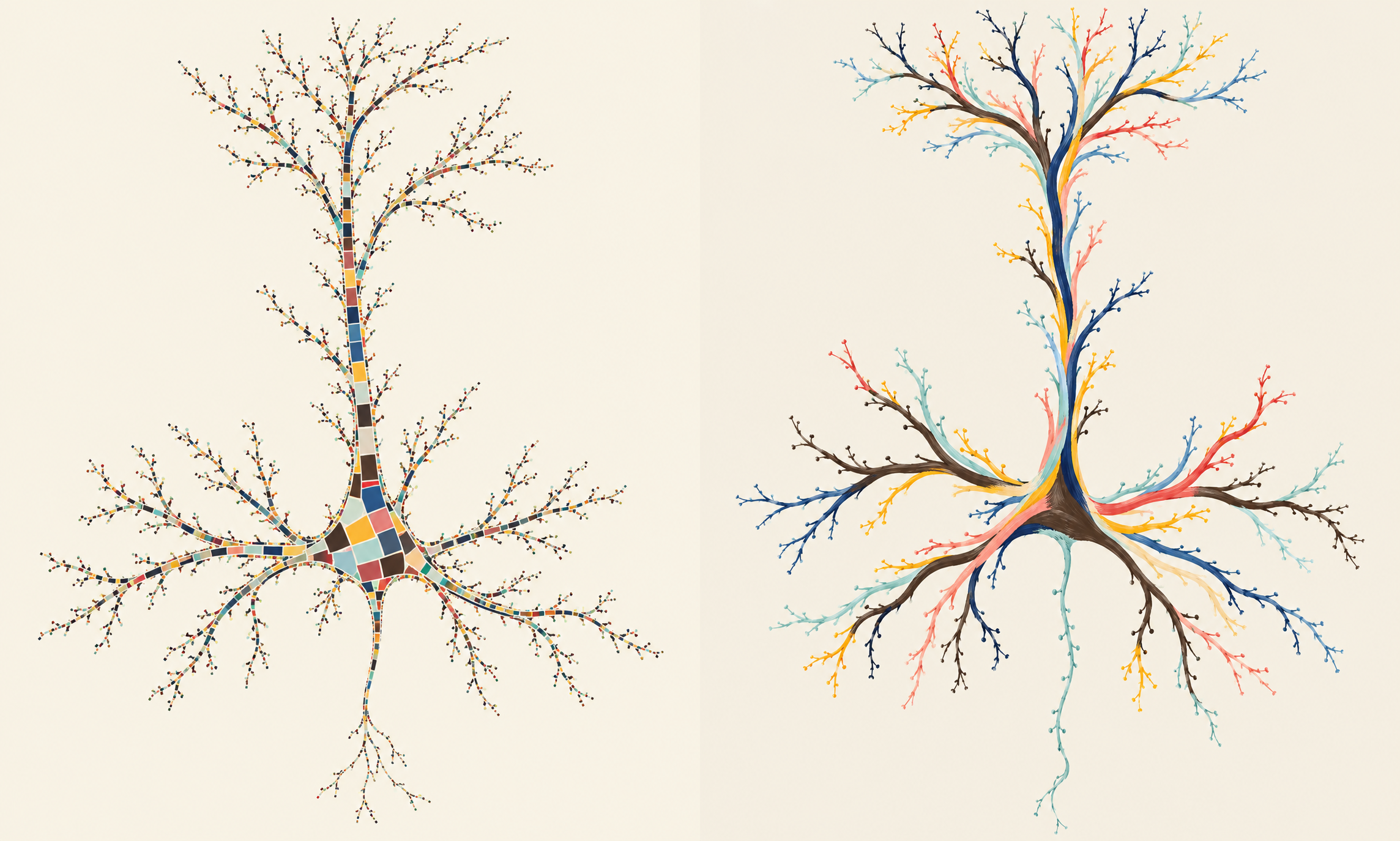
How Long Is the Coast of a Neuron? Resolution-Dependent Interaction Order and Computational Capacity
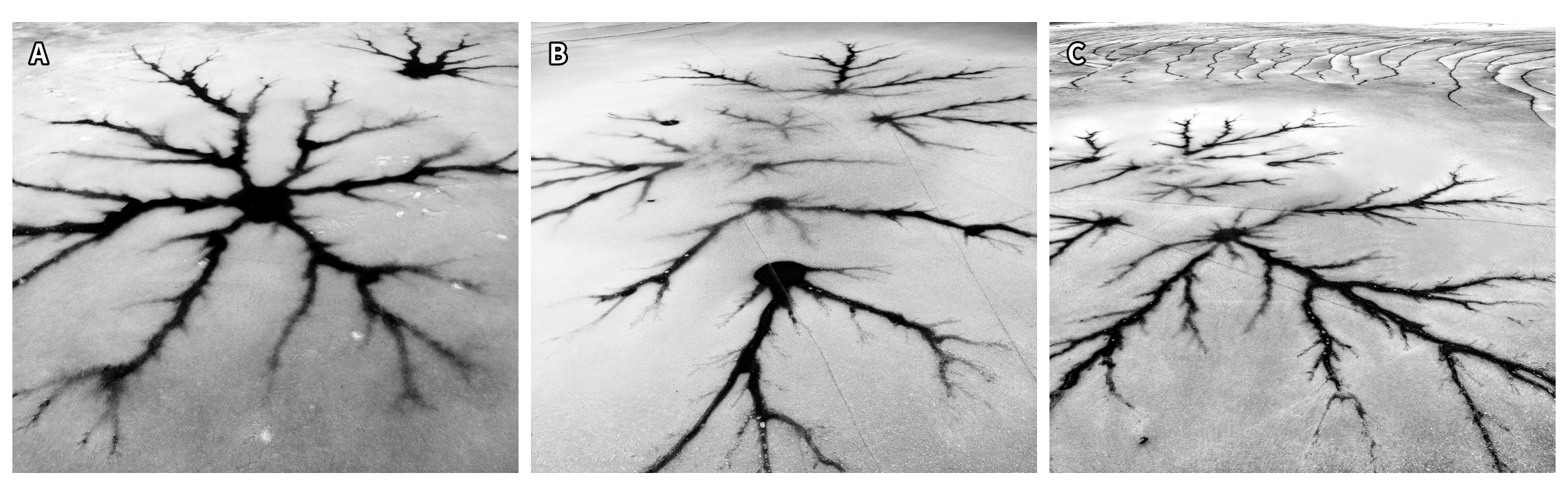
Field closure, ice neurons, and when a dendrite is a motif