Compression, Regularity, Randomness and Emergent Structure: Rethinking Physical Complexity in the Data-Driven Era
Summary
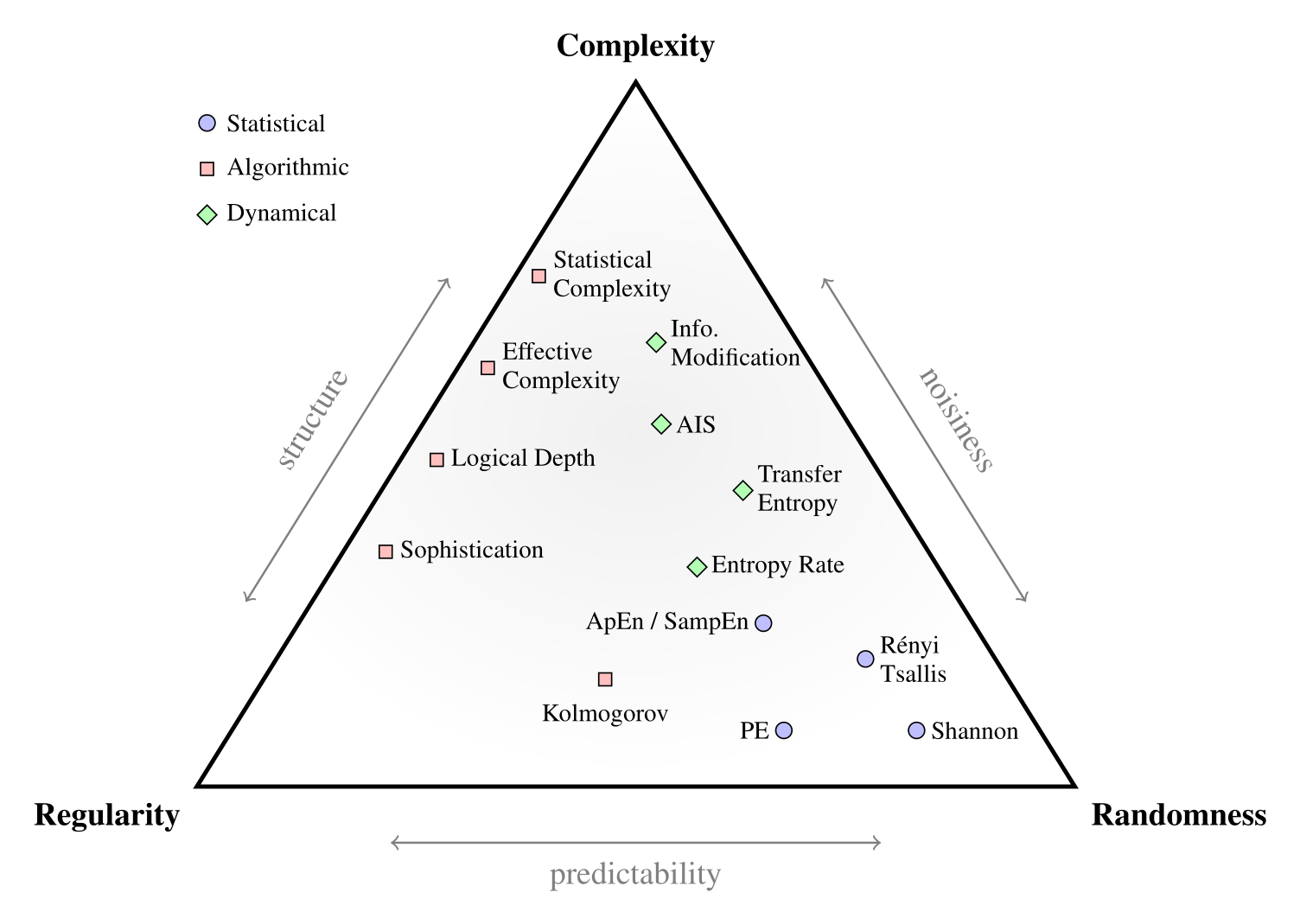
This paper proposes a unified framework that systematically maps statistical, algorithmic, and dynamical complexity metrics along three orthogonal axes: regularity, randomness, and complexity. To address the practical challenges of uncomputability in classical theoretical measures, the work illustrates how modern data-driven architectures—including autoencoders, latent dynamical models, symbolic regression, and physics-informed neural networks (PINNs)—function as pragmatic, operational approximations to these ideals. Ultimately, the paper frames latent spaces as essential mathematical arenas where structured compression, noise management, and regularity extraction converge, outlining key principles for the future of physics-informed AI and automated scientific discovery.
Links
BibTeX tap to expand
@misc{dehghani_crx_2025,
    title={Compression, Regularity, Randomness and Emergent Structure: Rethinking Physical Complexity in the Data-Driven Era},
    author={Nima Dehghani},
    year={2025},
    eprint={2505.07222},
    archivePrefix={arXiv},
    primaryClass={cs.LG},
    url={https://arxiv.org/abs/2505.07222},
}
Code & Data
The room
Abstract
Complexity science offers a wide range of measures for quantifying unpredictability, structure, and information. Yet, a systematic conceptual organization of these measures is still missing. We present a unified framework that locates statistical, algorithmic, and dynamical measures along three axes (regularity, randomness, and complexity) and situates them in a common conceptual space. We map statistical, algorithmic, and dynamical measures into this conceptual space, discussing their computational accessibility and approximability. This taxonomy reveals the deep challenges posed by uncomputability and highlights the emergence of modern data-driven methods (including autoencoders, latent dynamical models, symbolic regression, and physics-informed neural networks) as pragmatic approximations to classical complexity ideals. Latent spaces emerge as operational arenas where regularity extraction, noise management, and structured compression converge, bridging theoretical foundations with practical modeling in high-dimensional systems. We close by outlining implications for physics-informed AI and AI-guided discovery in complex physical systems, arguing that classical questions of complexity remain central to next-generation scientific modeling.
Citing
If you use this code or build on these ideas, please cite the paper using the BibTeX entry above.
Doors · concepts in this room
Related rooms
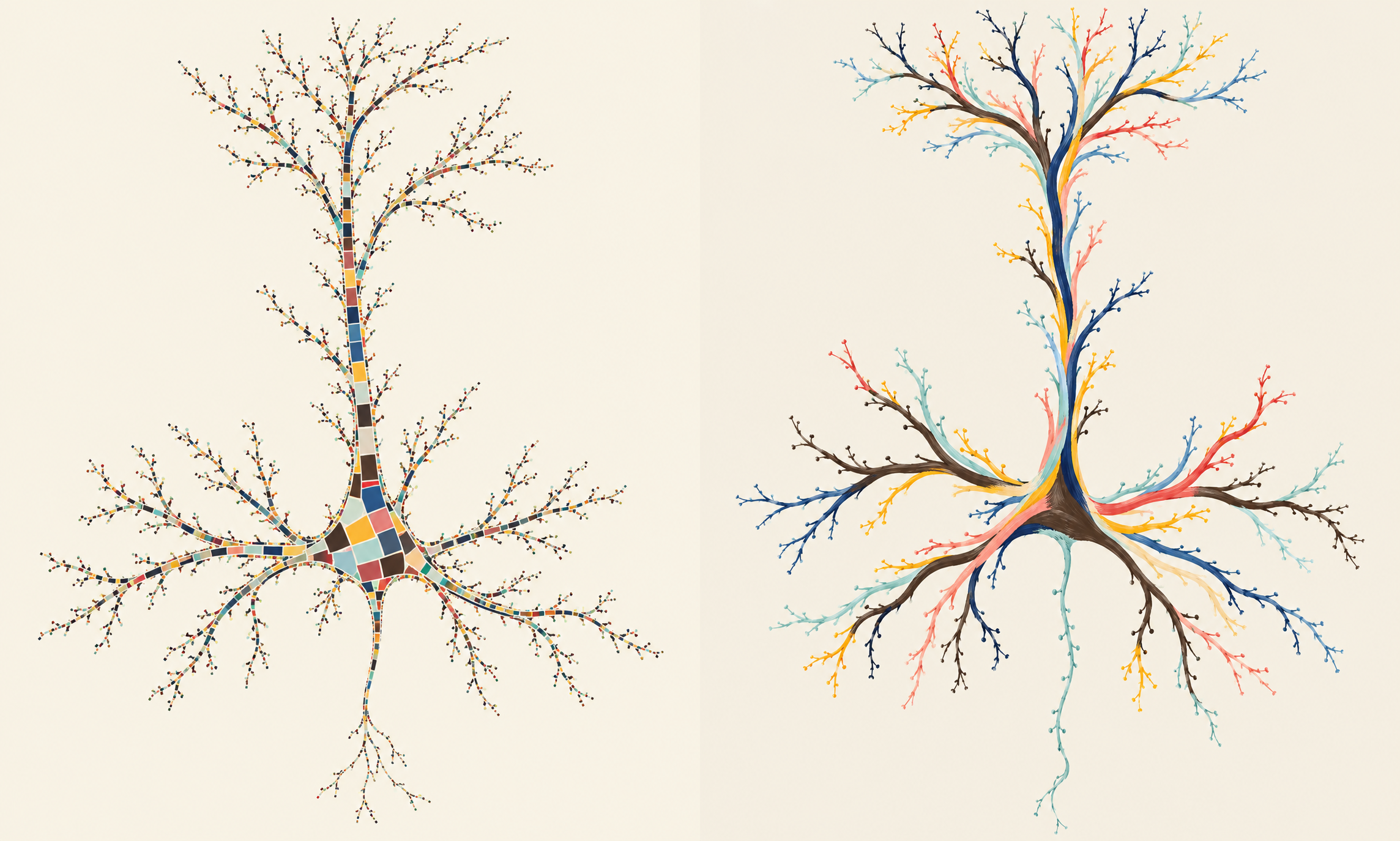
How Long Is the Coast of a Neuron? Resolution-Dependent Interaction Order and Computational Capacity
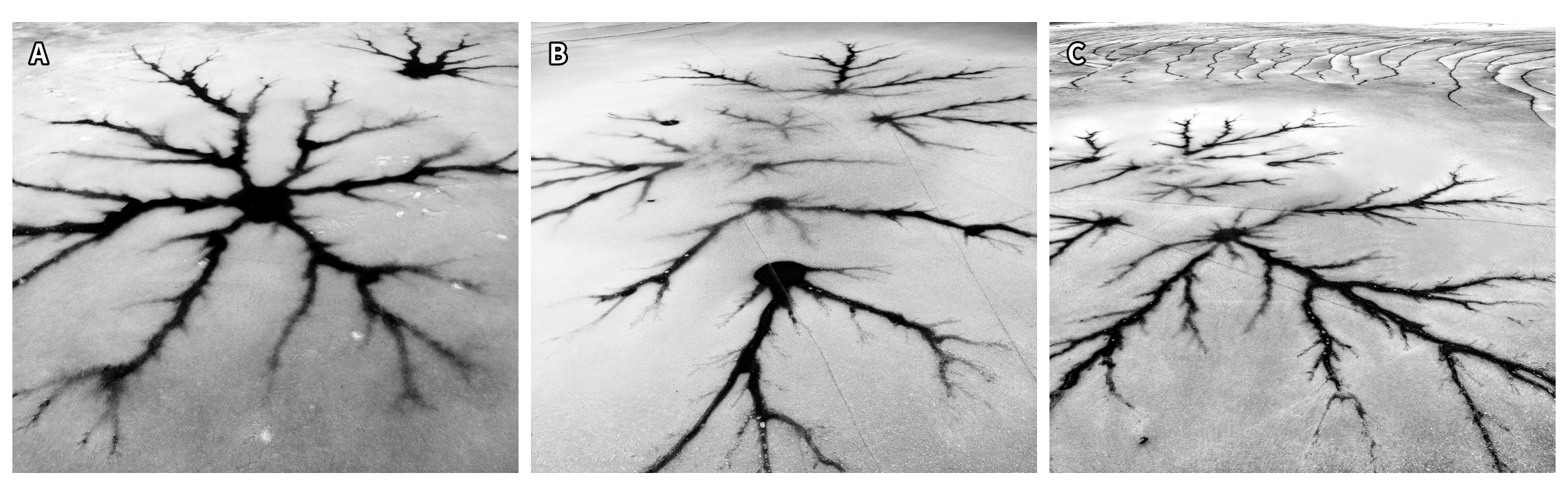
Field closure, ice neurons, and when a dendrite is a motif